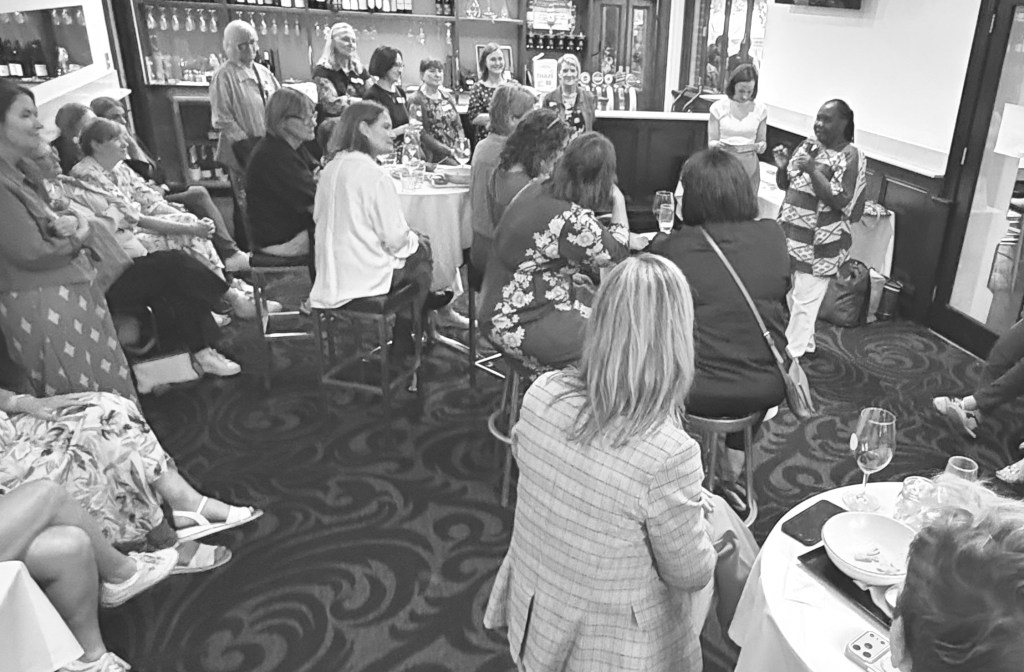
To recognise International Women’s Day, I joined women of all ages at an ALWS and Lutheran Education Australia Women’s Networking Event. There was laughter, connection and that familiar sense of shared purpose, the kind that comes when women gather with intention.
Then Mary Obara began to speak.
And the room leaned in.
Mary is a senior humanitarian leader and Program Manager with the Lutheran World Federation (LWF) Kenya-Somalia Program.
Born into a Catholic family in Kenya at a time when women’s education was rare, Mary’s life pivoted on one person who noticed potential and refused to let it go unrealised. A priest recognised her mother’s ability and ensured she completed her education, even after becoming a young parent.
That single act of belief set off a ripple effect.
A mother educated.
A daughter educated.
Generations changed.
Mary’s childhood was marked by protection, safe schooling environments, faith communities willing to step in and people who believed education could change the trajectory of an entire family.
That belief never left her. Protection, Mary reminded us, doesn’t always look dramatic.
Sometimes it looks like persistence.
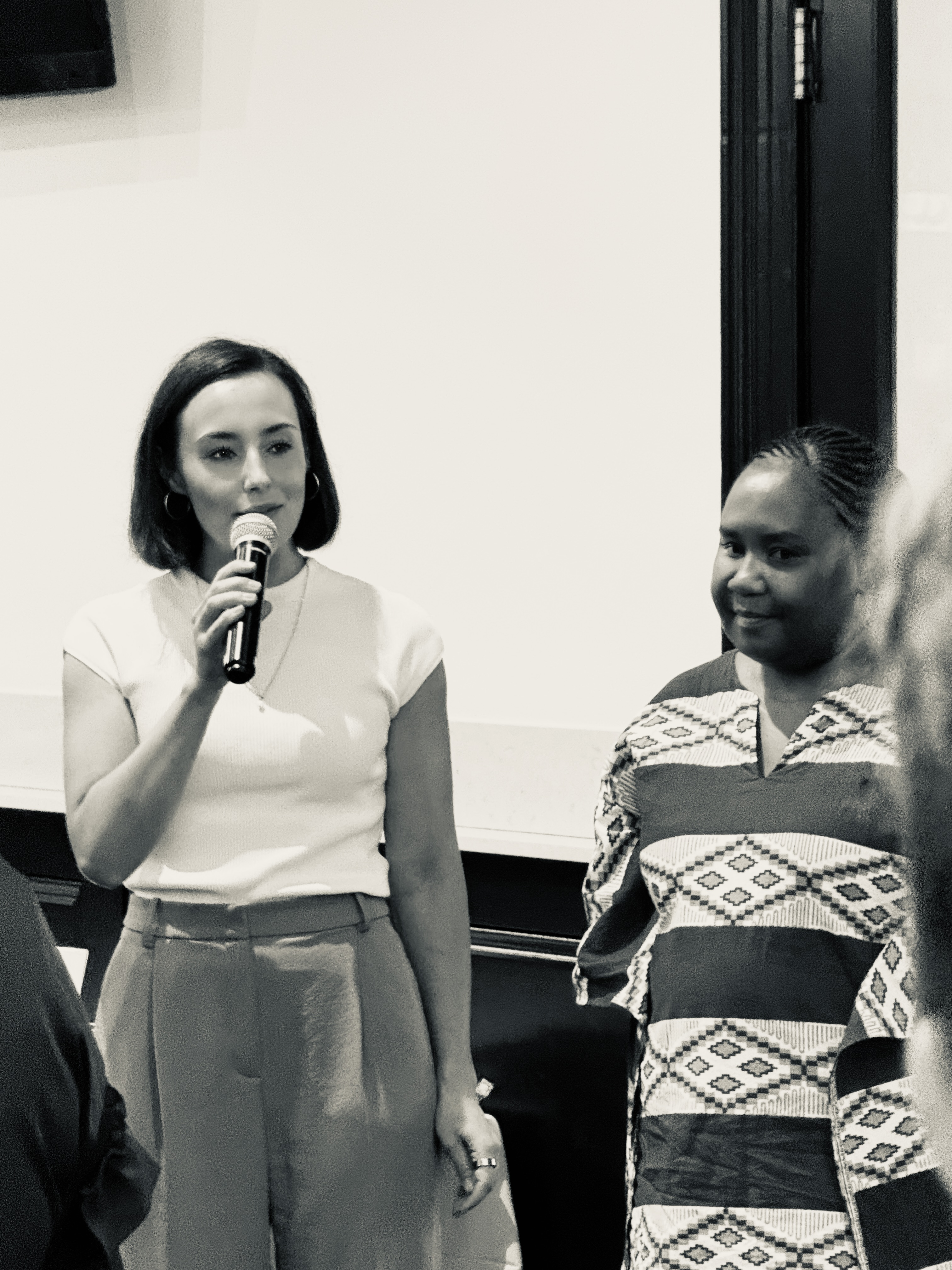
Morgan Brookes, Chairperson, ALWS interviews Mary Obara
From Classroom to Crisis Zones
Mary trained as a secondary school teacher and spent years teaching in rural Kenya. She spoke honestly about the realities, raising a child in remote communities, navigating unsafe environments, and seeing firsthand how vulnerable women and children can be when systems fail them.
Her path later wound through the airline industry and into international humanitarian work, eventually placing her in some of the most complex contexts in the world: refugee camps and displacement settings in Kenya and Somalia and earlier work in South Sudan.
After years working in conflict zones, experiences she described as deeply confronting, Mary stepped away to heal. She tended plants, walked with animals and found her breath again.
But the work called her back. Education, disability inclusion, refugee protection. This was not a career ladder, rather a calling that kept tugging.
Inside the Refugee Camps
Mary painted a picture that settled quietly over the room – not sensational, but steady.
Life in some of the world’s largest refugee camps – including Kakuma and Dadaab in Kenya – looks like this:
- Populations of 300,000-400,000 people
- Over 60% children
- Classrooms with up to 200 students per teacher
- Families living in tin shelters or makeshift huts of sticks and cloth
- Water available only at set times – if fuel is available to pump it
- Food rations that meet survival needs, but little more
And yet, amid all this, Mary spoke of gratitude.
“What people tell us is this, we may not have much, but we no longer hear gunshots.
We no longer see bodies falling around us.”
Education as Protection (Especially for Girls!)
One of the clearest threads of the evening was this:
education is not just learning – it is protection
Mary shared stories of girls at risk of child marriage, female genital mutilation (FGM) and g ender based violence. Through LWF programs, community mobilisers identify at‑risk girls and bring them into protective school environments – places where education, safety, and dignity intersect.
At schools like Angelina Jolie Primary School, class sizes are intentionally small. Trauma informed care is embedded. Girls are seen, known and given time. Many go on to become teachers themselves, returning to their communities as visible proof that another path is possible.
Mary also spoke candidly about something rarely discussed openly, menstrual health.
In refugee settings, a lack of clean water, private toilets and washing facilities means girls often miss several days of school every month, not because they want to, but because dignity and safety aren’t guaranteed.
LWF’s work now intentionally includes gender responsive school design, reliable water access, and safe, private washrooms. Because something as simple as a toilet can determine whether a girl stays in school, or disappears from education altogether.
Women Supporting Women
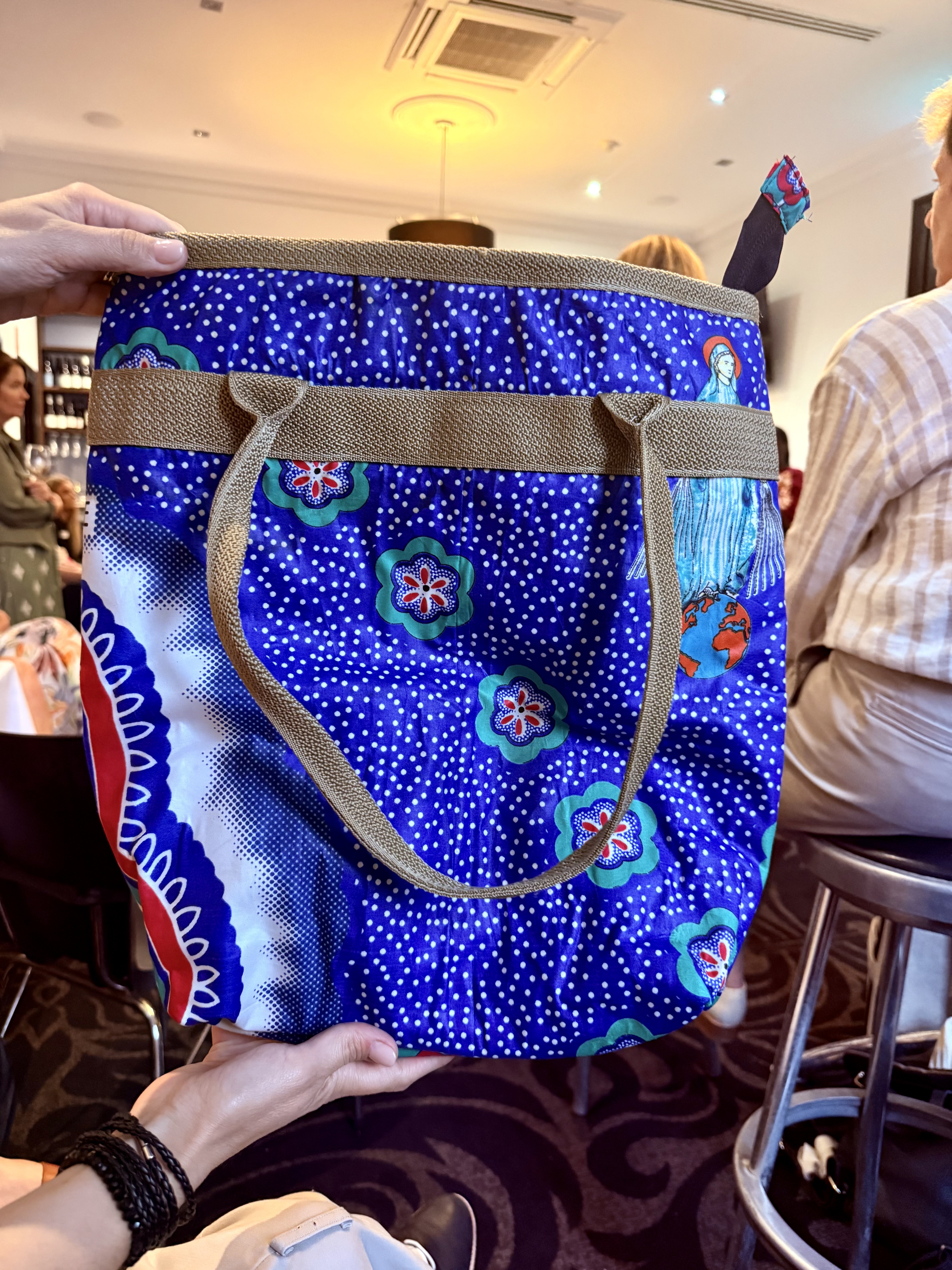
One of the most hopeful moments of the night came when Mary shared a small embroidered bag. It was a gift, made by a refugee women’s group LWF has supported for over 15 years.
Women who once had no schooling now run independent businesses, produce goods sold internationally, and win local contracts. They are no longer recipients of aid.
They are leaders.
“We don’t want to hold women forever,” Mary said. “We want dignity. Independence. Choice.”
It was one of those moments that feels quietly hopeful rather than loudly triumphant.
I left the International Women’s Day gathering reflective – not overwhelmed, but attentive.
Convicted.
Inspired.
And reminded that proximity to stories matters.
Mary’s invitation was simple:
Keep showing up.
Keep giving.
Keep praying.
Keep telling the stories.
And if you ever find yourself in Kenya:
“Come. Walk with us. See it. And then tell the story.”
If this story moved you, don’t let it stop here.
Support the work of ALWS and LWF.
Talk about education as protection.
Stand with girls at risk.
And when you’re invited into spaces like this – say yes.
Because stories – like education – don’t just inform us.
They change what we choose to do next.
Support the work of Australian Lutheran World Service (ALWS)
ALWS partners with organisations like the Lutheran World Federation (LWF) to deliver education, protection, water and sanitation, and livelihoods support in refugee and displacement settings.
Learn more http://www.alws.org.au
Get involved or give http://www.alws.org.au/get-involved
Contact ALWS 1300 763 407
Email alws@alws.org.au
 FromtheForest
Leave a comment