I’ve been to my fair share of parent evenings. Uniform updates, curriculum reviews, the odd rousing guest speaker. But nothing could have prepared me for the emotional and intellectual landslide that was the St Ignatius Tech Smart evening.
It wasn’t just another school event. It was a turning point. A line drawn in the sand. A moment where policymakers, educators, psychologists, and parents stood together to say, “enough.”
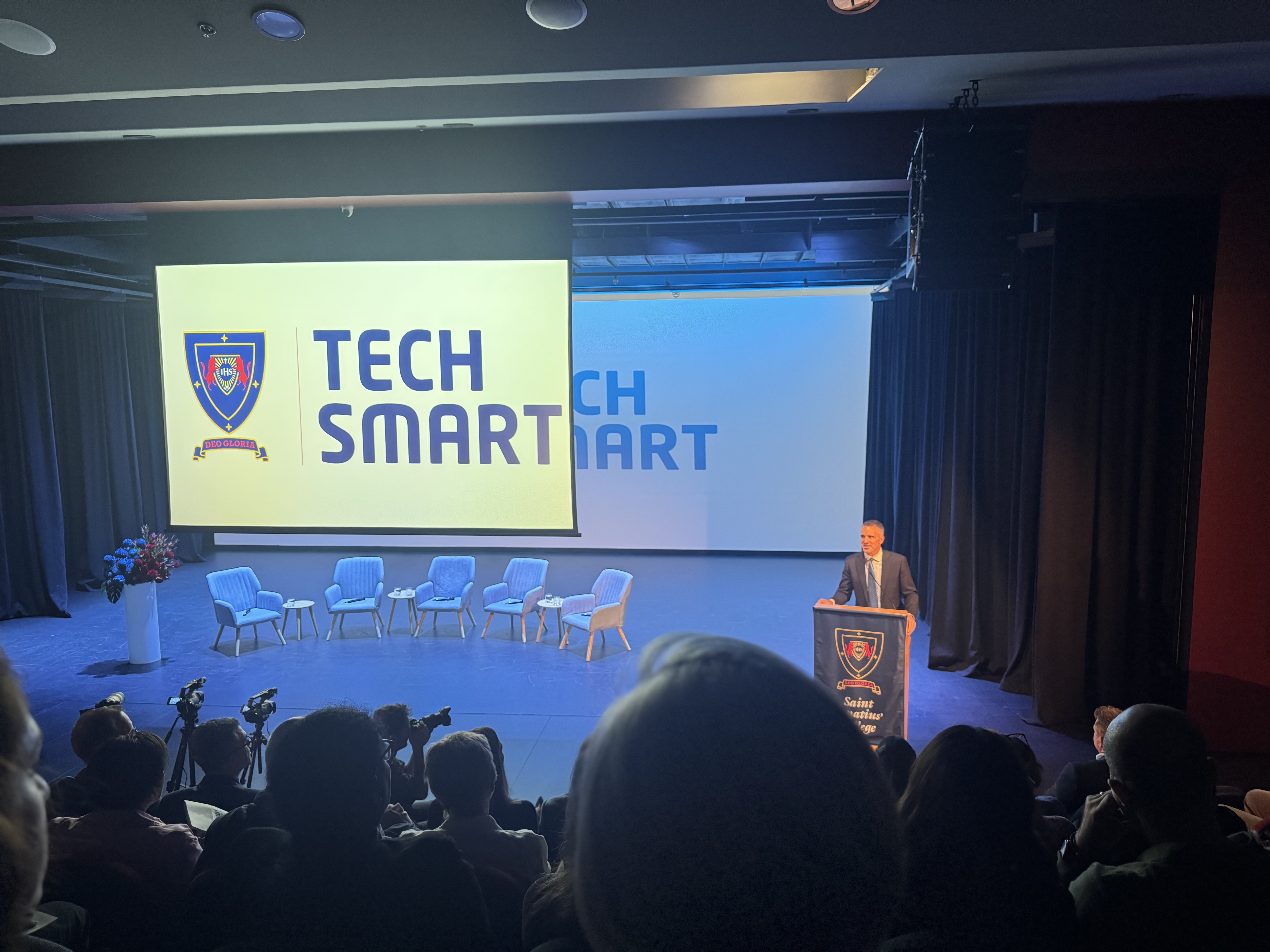
Tech Smart
Principal Lauren Brooks opened the evening with elegance and conviction, reminding us why she’s the kind of leader we need right now. She didn’t mince words: “Technology has moved faster than education or regulation could. We’ve needed bold, courageous people to ensure social media and technology use is not the exception, but guided as the new norm.”
St Ignatius’ College is leading by example, not only hosting this ground breaking event but also walking the talk. Beginning in Term 2, they will introduce Tech Smart Tuesdays a weekly commitment to limit screen use in favour of handwriting, discussion based learning, physical books, and wellness activities like lunchtime walks.
Year 12 students Gabrielle Elias and Tumbika Kalua, both 17, welcomed the initiative: “For mental health and physical health as well, getting outdoors and doing more interacting with people is so beneficial,” Tumbika said. Gabrielle added, “Brainstorming and class discussions offer perspectives you can’t really find from Google.”
Lauren Brooks explained it best: “While technology is a valuable tool for learning and communication, we are acutely aware of the cognitive concerns associated with reduced focus and increased distractions.”
By dedicating one day each week to digital awareness, they’re setting a powerful precedent for more mindful and intentional technology use across the week.
The Premier Who Got Personal
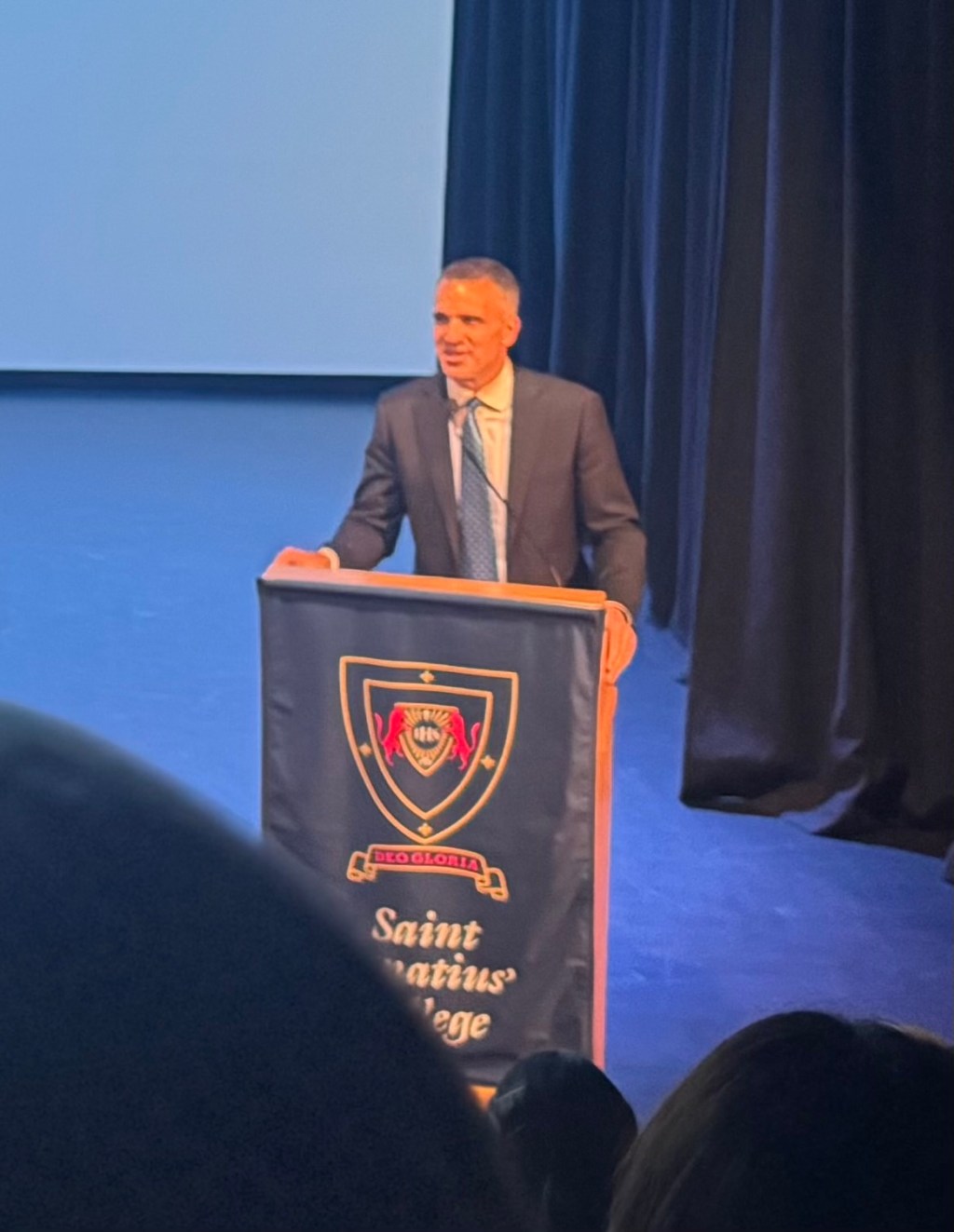
South Australian Premier Peter Malinauskas didn’t arrive with platitudes. He arrived as a parent.
He spoke candidly about his children, both growing up in a world where social media and screens will inevitably play a central role. And then came the moment that quieted the room, his story of sitting beside his wife Annabel as she read Jonathan Haidt’s The Anxious Generation. She paused, closed the book, and handed it to him with a simple yet urgent directive – “You need to read this, and then you need to do something about it.”
And he did.
Malinauskas shared the behind the scenes story of South Australia becoming the first jurisdiction in the world to legislate a social media age limit. He laid bare the legal grey zones, the federal state wrangling, and the moment former High Court Chief Justice Robert French agreed to chair the legal review for free.
“Social media is doing real harm to young people,” he said. “Not only is it addictive, it has been industrialised to be addictive. The platforms profit from our children’s suffering.”
And then came the kicker – if the federal government didn’t act, South Australia would.
He also proudly reflected on the success of South Australia’s nation leading mobile phone ban in public schools, introduced in 2023. A year on, reports show reductions in violence, increased classroom engagement, and a return to face to face connection. One principal told him, “I walked into the schoolyard and heard a sound I hadn’t heard in years – children laughing, playing, talking. I didn’t realise what we had lost.”
Education Minister Blair Boyer has since confirmed he is exploring “technology free days” for public schools, inspired by models seen internationally.
A Father’s Grief, A Nation’s Wake-Up Call
Wayne Holdsworth followed, and what came next was nothing short of sacred.
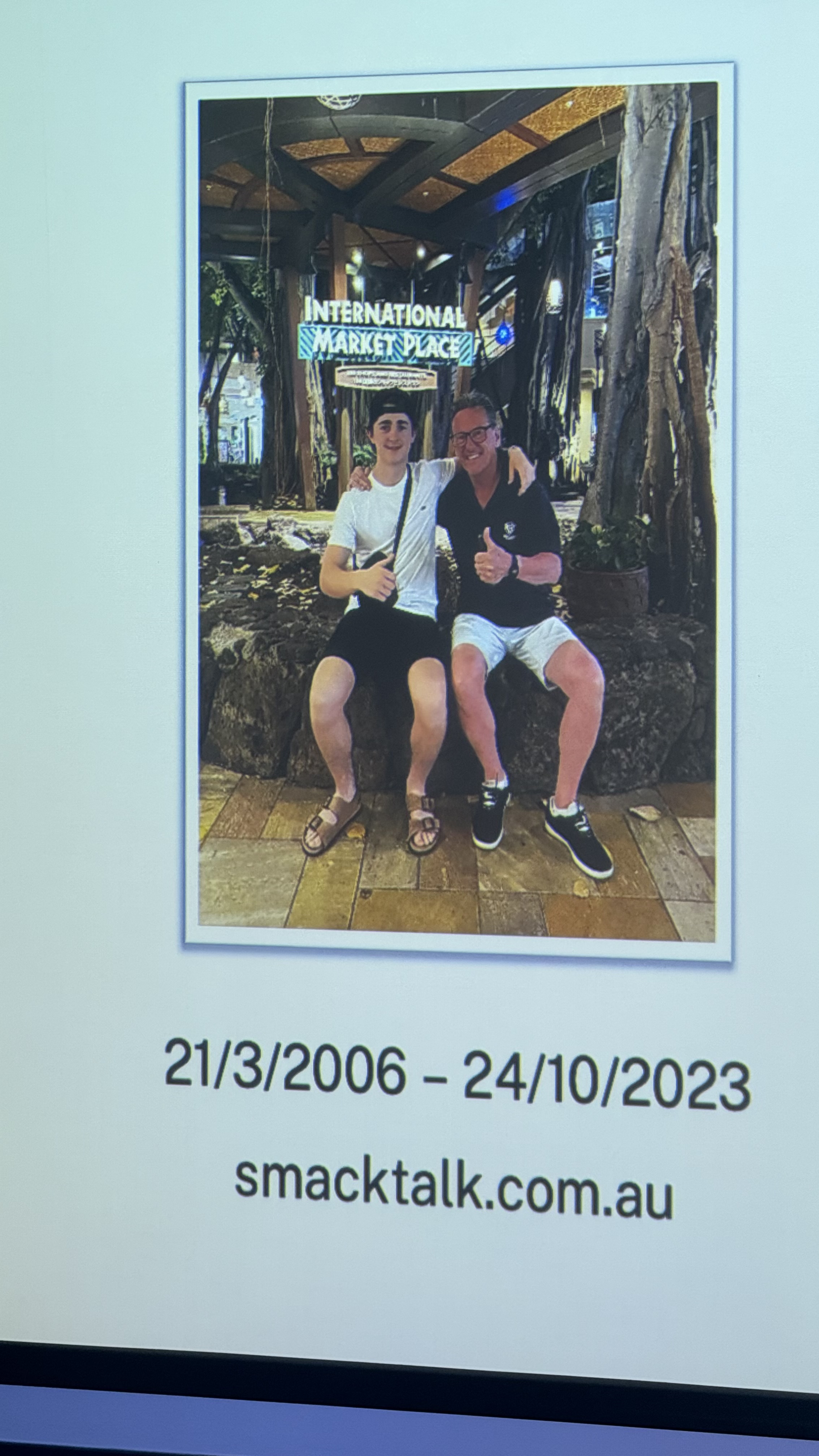
Wayne is a sports executive. He’s also the father of Mac, a 17-year-old boy who took his own life after being extorted online. His story is one I will never forget.
Wayne spoke about dinner with his son the night before he died. The inside jokes. The washing up ritual. The final words as they planned his son’s drive to work, “I can’t wait to drive your car in the morning.”
Then came the next morning. The unanswered knock. The open door. The discovery no parent should ever have to make.
The auditorium held its breath as Wayne recounted calling triple zero, holding his boy, his tears falling onto Mac’s cold face, and the unimaginable grief of telling his daughter Daisy that her brother was gone.
And yet – from that horror, he created SmackTalk. In eight months, he’s spoken to over 15,000 students. He’s saved lives.
“The only way I can reconcile my son’s death,” he told us, “is to help others.”
Social Media: The New Public Health Crisis
Backed by experts like Dr. Danielle Einstein, Dr. Simon Wilksch, Madhavi Nawana Parker, and parenting advocate Dany Elachi, the message was reinforced with science and practical insight:
- Children exposed to calming devices during tantrums show more aggression a year later.
- Excessive gaming rewires the adolescent brain, reducing emotional regulation and memory.
- Social media use increases anxiety by encouraging procrastination, leading to higher rates of school refusal and eating disorders.
- Children as young as five are being targeted with violent pornography and sexual extortion.
- Girls as young as seven are suffering body image issues and anxiety from digital comparison.
Dr. Einstein explained, “Even the sight of a device now triggers a dopamine response. That’s the very definition of addiction.”
Dr. Wilksch added that eating disorders among 10–14 year olds have increased by over 200% since 2012, correlating with the rise of social media. “Social media’s visual nature fuels harmful appearance-based comparisons. We now see primary aged children in clinics.”
Dany Elachi, co-founder of the Heads Up Alliance, brought a powerful parental voice: “We gave our daughter a phone at ten. She withdrew. We took it back. She cried for weeks. And now? She thanks us.”
Unplug 24: A National Statement
Wayne concluded with the story of “Unplug 24,” a campaign asking Australians to go screen free for 24 hours on October 24—the anniversary of Mac’s death. Last year, over 130,000 people joined. This year, the goal is one million.
His message – our kids need to know we are in charge of our devices – not the other way around.

What Next?
With new federal legislation restricting social media access for under 16s set to take effect by late 2025, we are at a crucial crossroads. As Premier Malinauskas said, “There is no more time to delay.”
The legislation is a vital step, but implementation will rely on schools, parents, and communities working together. We need education. We need tools. And we need to model the behaviours we hope to see.
This seminar was more than a night of awareness. It was a call to action.
Let’s use this momentum. Let’s reshape how our children grow up in a digital world.
Let’s not look back in ten years and say we saw it coming but did nothing.
Let’s make sure that night wasn’t the climax of the story – but the beginning of a revolution.
I am thankful for this evening as a parent, an educator and a school leader and feel the conviction of the words as a heavy weight to bear.
 FromtheForest
Leave a comment