As I write this, the start of another school year at Lobethal Lutheran School is just around the corner. The laminators are humming, desks are being moved, big plans are being made – and still I feel nervous.
The night before the first day, I never sleep well. All those familiar feelings of anxiety, nerves, excitement, and possibility swirl around in my mind. I used to think these feelings would stop after a few years in my role as a teacher and principal. Now, I see them differently – they are a normal part of the process and even an opportunity to role model for our students.
This year, I’m reminded of one of my guiding mottos: begin as we mean to go on. It’s a phrase that speaks to the importance of setting clear, intentional foundations for the year ahead – foundations that foster resilience, character, and a growth mindset in our students.
When I first stepped into a leadership role, I didn’t realise how much I would learn from the students, parents, and staff around me. Each year brings new challenges and opportunities, and each year I’m reminded that education is a shared journey. It’s a journey that requires us to set the tone early and build a strong foundation from the very start.
One of the biggest lessons I’ve learned is that we, as educators and parents, have the power to model behaviours and attitudes that will carry through the entire year. It’s about setting expectations early – expectations of kindness, respect, responsibility, and perseverance. These values don’t just happen; they need to be intentionally nurtured and demonstrated.
Addressing Anxiety and Building Resilience
This intentionality extends to how we address challenges like anxiety and resilience. Two recent articles have sparked significant conversation in this area: Children’s Anxiety Not a Badge by Stephen Lunn and Kids Need to Learn the Virtue of Character by Angela Shanahan. Both offer timely insights into how we, as a community, can better support our children in facing life’s inevitable challenges.
Anxiety Not a Badge
Stephen Lunn’s article highlights a concerning trend: the pathologising of normal childhood emotions, particularly anxiety. Clinical psychologists Danielle Einstein and Judith Locke argue that anxiety has become a “badge of honour” for young people, amplified by social media and well meaning adults.
They caution against over focusing on children’s anxious feelings and offering special accommodations that may unintentionally reinforce the anxiety rather than helping them overcome it.
Their message is clear – anxiety is a normal human emotion, especially in challenging situations like giving a speech or the first day of a new school.
By removing obstacles rather than encouraging children to face them, we risk robbing them of the chance to develop resilience.
Psychologists advocate for helping children learn to manage discomfort, endure difficult moments, and build confidence in their own abilities.
The Virtue of Character
Angela Shanahan’s article delves deeper into the broader issue of character development in children. She argues that our society’s shift towards overprotecting children is eroding the development of key virtues like resilience, self regulation and resourcefulness, placing the child’s immediate comfort above long term growth, leading to a lack of resilience when faced with life’s inevitable challenges.
Facing Challenges Builds Strength
Both articles underscore a vital truth : children need to face challenges to grow. Avoiding discomfort may provide temporary relief but ultimately stunts the development of essential life skills. When children learn to push through discomfort, they gain confidence in their ability to handle adversity – a crucial skill for adulthood.
As educators and parents, our role is to guide children through these challenging moments, not shield them from every difficulty. This doesn’t mean ignoring their feelings, but it does mean normalising nerves and discomfort as part of life. Rather than asking, “How do you feel about school camp?” and focusing on their worries, we can frame the conversation differently: “What are you looking forward to at camp?” or “What do you think will be the best part?”
Of course, this isn’t about discounting genuine anxiety or mental health needs. Some children require significant support, and it essential to have scaffolds in place to assist those who need it, balancing this support with opportunities for children to build resilience and self efficacy through healthy challenge.
Practical Steps for Parents and Educators
- Encourage resilience Normalise feelings of nervousness and encourage children to face challenges rather than avoid them.
- Focus on actions, not emotions Shift conversations from “How do you feel?” to “What happened today?” and “What did you do?”
- Avoid over accommodation Resist the urge to remove obstacles for children. Instead, support them in overcoming challenges.
- Model growth mindset Demonstrate resilience and a growth mindset in your own actions and words.
Embracing Healthy Risk-Taking Through Forest Skills
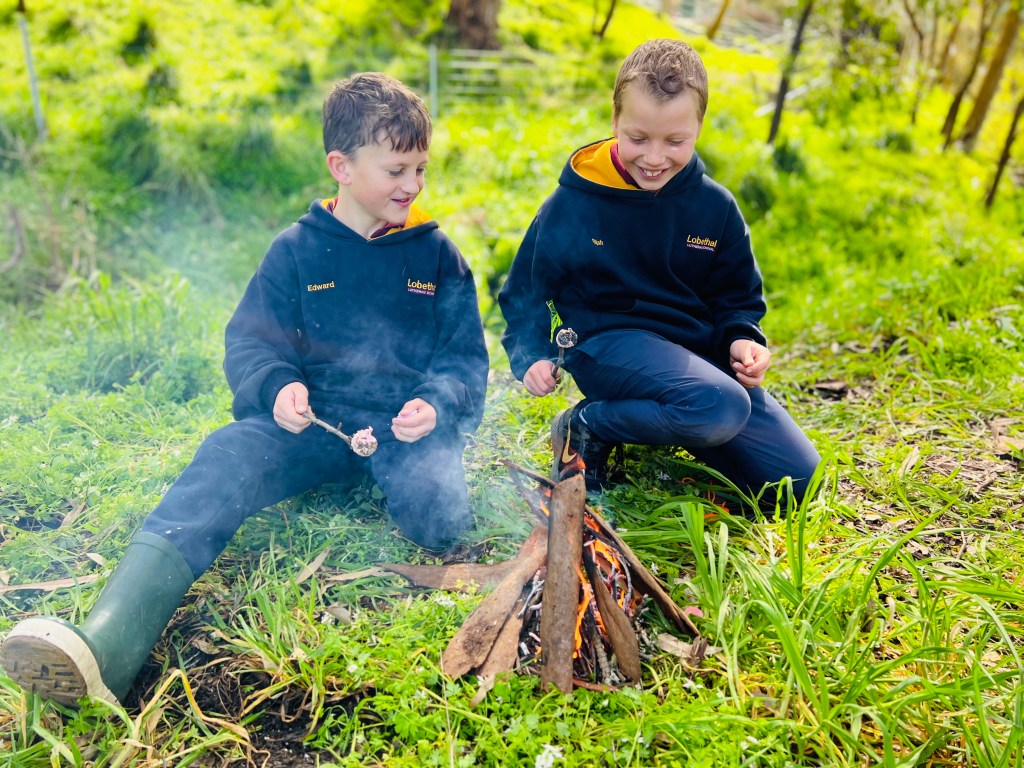
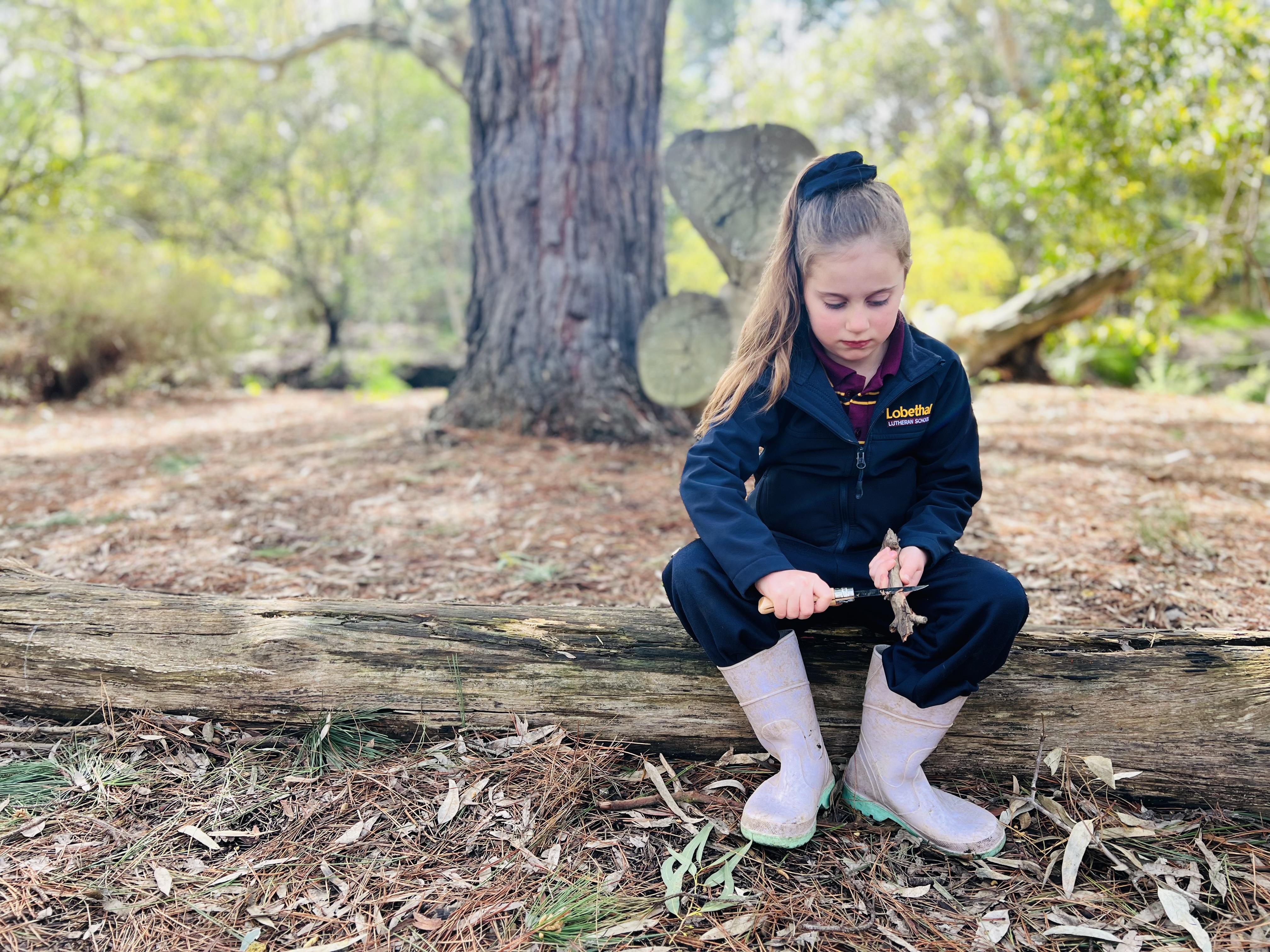
At Lobethal Lutheran School, one of the ways we encourage resilience and character building is through our Beyond Outdoor Learning program, which introduces an element of healthy risk taking through Forest Skills. These experiences empower children to assess and navigate challenges, fostering resilience and personal growth.
Through research, we discovered the power of forest skills in fostering critical dispositions – persistence, risk taking, mindfulness, collaboration, and stewardship. These skills serve as a framework for intentionally developing these essential life skills in our learners.
Whether it’s learning to use a knife, build a shelter, tie knots, or build a fire, these experiences equip learners with practical life skills. The risky challenges posed by these tasks teach resilience, problem solving, and the confidence to persevere in the face of difficulty. Learners grasp that they are capable of navigating uncertainty and overcoming obstacles, which translates into stronger self belief and independence. This ability to face challenges outside then translates into the classroom.
Our commitment to beginning as we mean to go on extends beyond the classroom. It’s about creating a community where virtues like resilience, respect, and responsibility are actively practiced and celebrated. We support our children in learning that they are capable, that they can endure difficult moments, and that they can grow through challenges.
As we work to create a culture that values character, resilience, and lifelong learning – a culture where every child can thrive our challenge is to remember : how we begin sets the tone for everything that follows. Begin as we mean to go on.
 FromtheForest
Leave a comment